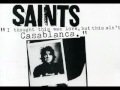
Now Buffalo's The Goo Goo Dolls career made no sense. Two ignored mid-eighties metallic pop-punk albums, two more Repalcements-esqe college-rock albums which garnered a little more praise (but mostly for the first one, Hold Me Up) and then in 1995 the band, almost overnight, took over the pop charts (and the glossy magazines) with songs that were smart, catchy and impeccably produced by Bob Mould's main man Lou Giordano. It was like The Goo Goo Dolls had decided to learn from Mould's Sugar and Grave Dancer's Union era Soul Asylum instead of Westerberg's oeuvre. While still in thrall to the greater sounds of Minneapolis, The Goo Goo Dolls hit on a formula that could be gussied-up more every subsequent album until they became pretty hard to take but on most of A Boy Named Goo even their fuck-ups sound like gold.
This bootleg of B-sides, soundtracks etc, which includes covers of The Soft Boys' "I Wanna Destroy You", The Rolling Stones' "Bitch" and The Damned's "Hit of Miss (nice choices, boys) is only for the converted but maybe I'll convince someone to go back and re-hear the awfully-titled A Boy Named Goo with the absence of prejudice, as I managed to do when I picked up a blank-covered pre-release cassette from my work the month before the album hit big and quickly discovered that it just all made sense. Extended link is in the comments.
Speaking of comment: Whether you feel love, hate or indifference toward the Goo Goo Dolls tell us why.
As a live band The Ruts were utterly unrelenting, no matter what the tempo.
(Okay that was lip-synched but not everyone was going around recording shows on their phone back in nineteen and seventy-seven - in fact even French TV cameras didn't look or sound too good back then.)
The other half of this out-of-print CD features Pauline Murray's later-period Penetration, and includes my second favourite song of theirs, their pop-ified cover of the Buzzcocks "Nostalgia" .
This cover as well as "Don't Dicatate (and a few others spread over their two albums) seem to be Penetration's finest work. Perhaps it's the metal guitars (Fred Purses would later join Tygers of Pan Tang) or the lack of material strong enough to showcase Murray's powerful voice that make this band seem like a quickie.
BBC Radio 1 Live in Concert link is in the comments
The Ruts were not "Clash copyists" as Chris Salewicz claims in Redemption Song, nor did they have "...Every thing The Clash had been striving for in their ersatz reggae excursions" as Clinton Heylin claims in Babylon's Burning. The Ruts need not be a facile point of comparison for Clash-freaks and Clash-bashers to buttress their argument, for they were the instigators of a funky-reggae-punk-metalriot of their own. It's not to say that The Clash's regatta de blanc didn't inspire The Ruts (as well as Stiff Little Fingers, The Specials and {yes} The Police) but, as with any band, you judge their success not based on what they began with but on what they finished with.
Malcolm Owen and Paul Fox were living on a Welsh hippie commune when punk rock came calling. Moving to London, leaving behind a funk band named Hit and Run, the band found unusual patrons like Phil Lynot of Thin Lizzy (who gave them a song) and Brit-reggae band Misty (who financed their first single) and BBC DJ John Peel (who played that single every night for weeks). Less then two years later it wold all be over when Malcolm Owen made the the classic junkie slip of celebrating his detox with 'one last fix' and died on July 14th 1980.
Thankfully, the band's sole album, The Crack, and it's odds n' sods follow-up Grin and Bear It, (each with a few bonus tracks) remain in print. Unfortunately without the kind of deluxe re-issue which would include all their studio material, these incendiary songs the band recorded for John Peel (why, oh why does this version of the proto-hardcore "Society" never make it onto one of their primary re-issues?) remain hard-to-get. So relish this out-of-print collection, which sounds more singular now than ever, and be sure you've done your part to support the surviving Ruts.
Peel Sessions CD link is in the comments.
Speaking of comments, is there really a significant Ruts-Clash rivalry?
Some claim that directors Joel and Ethan Coen, in the their once-dismissed-but-now-revered 1998 film, The Big Lebowski, rescued Bob Dylan's "The Man in Me” from abject obscurity. It’s untrue, though that’s no knock on the Coen’s unforgettable use of it in the movie’s title sequence. “The Man in Me” has in fact been dug up many times by those types of artist who comb through every Dylan album for their shot at Rock Greatness (Hendrix Division). Throughout the seventies, artists of all styles took a crack at the song and even eighties pop confection Nick Kamen gave it a whirl. What the Coen’s (and their musical archivist, T-Bone Burnett*) did, was to pluck Dylan’s own version from the under-appreciated 1970 album, New Morning and add some tricky but sensual camera work plus a whole lot of bowling!
The song itself is a product of Dylan’s hazy-lazy domestic period (1967 to 1973, approximately) and while it’s somewhat simplistic lyrics (“Takes a woman of your kind/to get through to the man in me”) are drenched with buckets full of sentiment and la-la’s, somehow the song doesn’t feel as schmaltzy as some of the other Guy Smiley material from this period. In fact, the song has turned out to wildly malleable, as musicians from all over the map have been proving since it was released almost forty years ago.
So once again, in the interest of rampant obsessiveness, MRML would like to present twenty-seven versions of "The Man in Me". As any such collection must be it's a frighteningly mixed bag, ranging from inspired to insipid. While I haven't included every version ever recorded, I've tried to include those of most interest. That said, insightful suggestions and thoughful corrections are still welcome.
*
2013 Update the player links below are broken, so here's a playlist with (almost) all the songs on it!
1. Indiana's Lonnie Mack was an early guitar hero with a deep knowledge of rockabilly, soul, country and blues who recorded a version the song that touched on much of his musical heritage for his 1971 The Hills of Indiana album.
2. France's Serge Kerval translated the song into the French language and into the French tradition of singing like world-weary lounge singer in 1971 for his album Serge Kerval Chante Dylan.
3. Soaring, stirring A cappella-soul from New York group The Persuasions' 1972 album Street Corner Symphony.
4. The song became a lush falsetto extravaganza in the hands of Al Kooper (who played on the original version) on his A Possible Projection Of The Future/Childhood's End album of 1972.
5. Australia's Duck give us a horn-driven rock-funk take on the song (which sort of foreshadows Dylan's 1978 revamp of the song) from their 1972 album Laid.
6. Americans McKendree Spring folk-country-rock version of the song, which, while not unpleasant, does crank up the mellow to yawn-inducing levels.
7. On his 1976 album British shouter Joe Cocker did tried to up the drama on the song but to no great effect.
8. Brit-reggae men Matumbi brought the song into yet another lexicon and had a substantial hit when they released it as a single on Trojan Records in 1976.
9. Austrian Wolfgang Ambros' 1978 version of the song, "Da Mensch In Mir", could really use some sturm and drang.
10. Dylan's drastic re-casting of the song on the 1978 tour that would result in the much-lambasted Live at Budakon album was accompanied by a more poisonous, adulterous re-write of the lyrics.
11. The Clash's ultra-boxy-sounding rehearsal version of the song (from a set of demos called The Vanilla Tapes later appended to London Calling) is more likely a result Paul Simonon putting the brilliant Matumbi version of the song on the jukebox at the Vanilla rehearsal studio then Mick Jones getting every Dylan album from CBS after the Clash had signed to that label.
12. As possibly the sole eighties entry on our list, we have British male-model/singer/song-writer/Madonna-protege Nick Kamen's 1987 version which is a melodramatic synth-pop ballad with a nice ska subtext.
13. Toni Vescoli's 1993 version of the song, "De Maa I Mir", from an 1993 album of Dylan covers, is in Swiss....
14. Chris Robinson and Marc Ford, who did this loping live version in 2001 are from American retro-rockers The Black Crowes whom I am told are more enjoyable if, big if, you love the Rod Stewart's Faces.
15. Jamaican Freddie McGregor had covered the many styles of that island's music but seems to have been most successful with the smooth style known as lover's rock of which this 2002 version of the song could be called a late example of.
16. The regional compilation is Duluth Does Dylan, the year is 2006, the band is No Wait Wait, the sound is an organ-powered roots-pop.
17. Kentucky band My Morning Jacket, whose singer, Jim James appeared in "I'm Not There" singing "Going to Acapulco" in white-face make-up were an aughts indie fave and their take on the song is that sorta folky-and-mellow-but-deeply-emotional thing that was big in their heyday.
18. Boston's Buffalo Tom have always shown great taste in covers and aren't afraid to give this song a right good kick in the ass.
19. Californian David Lowery was in eighties indie kingpins Camper Van Beethoven but his other band Cracker have a bit on of undeserved one-hit-wonder reputation, which this jammy version of the song won't, in and of itself, dispel.
20. Californian emo-punk band Jenoah recorded an indie-folkish version of the song for Drive-Through Records Listen to Bob Dylan compilation from 2006.
22. L.A. band Say Anything do the classic high-fructose pop-punk-emo take on the song (circa 2006) which while not particularly innovative does break up this somewhat mellow set effectively.
23. The much-hyped indie-pop band Dr. Dog from Philadelphia performed this song at Lebowskifest in 2007 but based on their newer work one suspects in a studio it would sound a little more distinctive.
24. Former Drive-By Trucker Jason Isbel is from Memphis and he brings out some of the Muscle Shoals soul in the song for this 2008 live performance.
25. Chicagoan Dan Andriano (from punk band Alkaline Trio) does the classic one-guy-one-acoustic take on the song, which will make some of you hope that a more ferocious version of the song might makes it into his band's repertoire.
26. Man, indie-folk bands like this D.C. outfit love this song to death, though in this 2009 version Vandeveer do add some surprises like different lyrics and some arrangement quirks.
27. So in 2009, after "disbanding" Pedro the Lion and "breaking up with God" David Bazan recorded a single with covers of this song and Leonard Cohen's "Hallelujah", which seems to cover two pieces of very well-worn ground though his take on each of the songs evinces a charming earnestness.
Speaking of comments, give us your take on the many uses and mis-uses of "The Man in Me".
* Historical note: "Burnett...had a tough time securing the rights to Townes Van Zandt's cover of the Rolling Stones' "Dead Flowers", which plays over the film's closing credits. Former Stones manager Allen Klein owned the rights to the song and wanted $150,000 for it. Burnett convinced Klein to watch an early cut of the film and remembers, "It got to the part where the Dude says, 'I hate the fuckin' Eagles, man!' Klein stands up and says, 'That's it, you can have the song!' That was beautiful". (source Wikipedia) 167166166
Live at Raul's greatest contribution to humanity is that it acts as a witness to the resurrection of sixties psychedelic casualty Roky Erickson. These two tracks show Roky teaching the kids about raw n' bloody rock n' roll but without the ignorance of history punkers often feigned
Live at Raul's link is in the comments.
Speaking of comments, give us your take on the Roky Erickson legend.
"Recorded in 1979, at the Austin club Raul's, this album has long been unavailable, but post-punk punkers can take heart thanks to the ongoing DejaDisc reissue program. It's all here; bashing guitars, inane posturing, post-World War pre-apocalyptic lyrics, and the gratuitous use of German to indicate an implied hip brave-new-world blank-generation-cool-without-responsibility in the face of an increasingly chaotic world. If you like music with no purpose, this album is for you. Just don't pretend that it's good."
MRML is a blog about the devestating effects of culture: music, politics, comics plus etc. blah blah blah. At times MRML will post fine, unpurchasable three-chord obscurica (punk, pop-punk, new wave, mod, power-pop, gospel, reggae, hardcore, rockabilly, folk, country...whatever.) - - - - - - "The otherwise unavailable files in this blog are posted for a limited time and are intended for educational, non-commercial use. These files were transcribed from what are believed to be out-of-print sources. If you are aware of any of these items being readily available from commercial sources, or if any of these files infringe upon rights that you hold, please notify us so that we can quickly remove the referenced items immediately." - - - SUPPORT THE ARTISTS - BUY MUSIC!
If you have any questions or music to donate you can contact me at musicruinedmylife (at) gmail (dot) com
Re: Re-Ups
MRML does not plan to restore all of the content lost in The Great Mediafire Gutting of 2012. Polite requests may be made in the appropriate section, regular commenters will get priority.

 Support the band...
 Support the band...