Tuesday, June 30, 2009

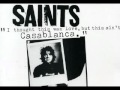
D.O.A. - Murder

(Thanks to musicgraphik for the image)

With the departure of lead-guitarist Dave Gregg, who kinda-almost-sorta played Mick Jones to Joey Shithead's Joe Strummer, in 1988, something great about D.O.A was lost forever. However, any band led by Joey Shithead is D.O.A. To be fair, 1990's Murder, their first album with new guitarist Chris "Humper" Prohom, has surprising strength, especially considering the dull swill many other survivors of the hardcore era were producing by that time.


The video for the electrifying opening track, "We Know What You Want" is, all budgetary limitations aside, quite excellent. It crosses Three Stooges slapstick with a David Mamet-styled satire of the bottom-feeders of capitalism. (Take special note of the mugging of wrestling legend Gene Kiniski, fresh off his appearance with Joey and Jello Biafra in the film, Terminal City Ricochet). The albums also boasts the finger-pointin', shout-that-chorus rocker, "The Agony and the Ecstasy" and the harmonica-driven "Concrete Beach".


The creeping fatigue, however, is hard to ignore. Out of thirteen tracks on the album two ("Where Evil Grows, "Midnight Special"), are covers, two are re-recordings of old tracks ("Waiting for You", "The Warrior Lives Again") another track ("No Productivity") dates back to Brian Goble's old band, The Subhumans and finally "Concrete Beach" is a song they'd been playing live since at least 1985. Something Better Change, indeed.


Download D.O.A. - Murder L.P.


Suuport the band!
MySpace
Sudden Death
Alternative Tentacles
Interpunk
Amazon

Monday, June 29, 2009

D.O.A. - True (North) Strong and Free


D.O.A. (see here) took some half-steps in their career. The 1987 album, True (North) Strong and Free (from a line in the Canadian National Anthem, "Oh, Canada") was one such curious half-step. On the one hand, it clearly continues the commercial aspirations of Let's Wreck the Party, especially on their fun but kinda slight take on Randy Bachman's "Takin' Care of Business".


On the other hand, it's also sort of a step back towards their grubby punk origins as exemplified by re-recording of their 1979 b-side,"Nazi Training Camp". It's at this point in their career that D.O.A. become to Canada what Motorhead are to England and what the Ramones were to America: a shifting aggregation, led by a singer most distinctive, who relentlessly circle the globe in an almost evangelical dedication to spreading the primal ferocity of rock n' roll.


Of course any single point of comparison falls apart when you listen to the sing-along, almost pop arrangements of a song like "Endless Sky" or the witty '77-style punk of "Lumberjack City", or even this album's funk-rock track, "Ready to Explode' which almost resembles some kind of old Leadbelly song at times. D.O.A. never claimed they'd abide by anyone's critical assessment.


Download True (North) Strong and Free L.P.


Here's D.O.A learning "Takin' Care of Business" at my old stompin' grounds (Wellington's) in the time just before I was able to sneak in.
Do not miss this follow-up interview with local celebrity Dan Pachette who filmed a lot of great bands for his public access show, Alternative Rockstand.


Support the band!
MySpace
Sudden Death
Alternative Tentacles
Interpunk
Amazon

Sunday, June 28, 2009

D.O.A. - Let's Wreck the Party

(A awkward album cover - the bald guy is Ken Lester D.O.A.'S Bernie Rhodes-like manager.)

Your first two concerts shape your musical vision; mine were Neil Young and D.O.A. Canadian rock legends in mid-eighties awkward spots became my benchmarks for live entertainment.Both shows were free courtesy of a brother-in-law who was covering them for the Winnipeg Free Press. We saw Neil in the since demolished Winnipeg Arena and got to watch from the Winnipeg Jets bench. D.O.A., on the other hand, played a social hall called Le Rendez-Vous, which had the ass-half of a canoe sticking out of it. All in all, it was pretty damn Canadian.


Neil Young, playing with the terribly-named International Harvesters, was deep in the middle of one of his recurring country-ish phases, Neil, returning to his former home town for the first time in years began by saying, "Welcome home" before launching into a slew of his best tracks, including a scorching solo acoustic, “The Needle and the Damage Done”.

(The almost Life Magazine like photo shoot for the North American cover.)

As for D.O.A. (Joey Shithead - vocals/guitar, Dave Gregg - guitar/vocals, Brian Goble - bass/vocals, Dimwit - drums), they played all their material, even the slicker material from 1985's Let’s Wreck the Party, with undiminished fury. Le Rendez-Vous turned into a smoke-filled, beer-soaked sauna and neither the band or the audience let up for a second.

(The more fitting UK album cover.)

Like Neil's mid-eighties album (his sales were so bad his own label, Geffen, sued for making music "unrepresentative of himself") Let's Wreck the Party's new direction was not met with universal acclaim. In fact when, in-between songs, Joey Shithead threw a sealed copy of the album into the crowd it got tossed back on stage, unclaimed! Y'see D.O.A. had, under the tutelage of 80’s hair-rock also-ran Brian “Too Loud” McLeod from the Headpins, cannonballed into the Rock mainstream. Like a Chumbawamba for the mid-eighties, they tried to mix pop trappings (keyboards, Big Rock guitar, saxophone) with radical politics (“General Strike”, “Race Riot” - listen here).

(D.O.A played Rock Against Racism, Rock Against Reagen and, yes, Rock against Radiation - alliterative action!)

The album bombed; too many metal tempos and neat n’ clean backing vocals for the increasingly-conservative punk scene and yet too crude for eighties pop radio (check out Wimpy’s gnarled vocals clashing with the MTV-friendly production on ‘Singin’ in the Rain’).


Let's Wreck the Party is, however, a logical successor to 1982’s nigh-on-perfect, War on 45. The anthemic tracks (like “Our World”) were, as their live show proved, still fist-waving and the song-writing had leapt forward. After covering Edwin Starr’s “War” previously, Joey Shithead then penned his own funk-protest tract, “Dance O’ Death” (a concert staple complete with The Rev. Joey Shithead and his flailing crucifix). While surely not a highlight of the album (even though it had a video!), the song showed that the band was no longer tied down by loud n' fast rules.


Let’s Wreck the Party is like D.O.A.’s version of the Clash's Combat Rock (War on 45 being like a condensation of London Calling, with no parallel Sandanista betwixt) - outwardly commercial but deeply weird. If it’s a sell-out, it’s unclear who the target market was. The album blenderized unassimilable sources (listen to those Doors-ish keyboards on the otherwise gruff "Murder in Hollywood") together and spilled out a reasonably cohesive album. Let's Wreck the Party may not surpass their earlier work but it got an adventurous feel, not something you'd say about every album they've put out since.


Speaking of new work, D.O.A.'s 2008 album, Northern Avenger ("Police Brutality" video here), with its giant production courtesy of Bob Rock is kind of a throwback to this album's sound, just with less musical diversity.

Most of D.O.A.'s most crucial releases are in print on Joey's Sudden Death Records please go there and support the band.)


Let’s Wreck the Party now available at Sudden Death!!

Suuport the band!
MySpace
Sudden Death
Alternative Tentacles
Interpunk
Amazon

P.S. They're making a documentary on D.O.A. (after all Joey was the only non-American to get time in the American Hardcore documentary).

Saturday, June 27, 2009

Rock Against Racism 2: More Than Just the Clash

There was more to the Rock Against Racism movement then the Clash (that link, and this one really illustrate the viciously incomprehensible factionalism of old new left.)

Some Clash-men and members of British Reggae outfit Steel Pulse (courtesy of the very informative uncarved). Here's that band's song, "Jah Pitney (Rock Against Racism)"


Another home-grown British reggae act to join with Rock Against Racism was the the Cimarons.


The Cimarons released this single, which errs towards a post-original Wailers Bob Marley groove, around 1979.


Download Cimarons Rock Against Racism 12"

And since I clearly lack the language to do true reggae justice, let's move on to some reggata de blanc.

China Street were not the Clash, in fact, as is often pointed out, they sound a bit like another UK reggae-inspired punk band, The Members. The words and the playing are a little predictable but damn this one's a grower (the b-side is the de rigueur dub mix).


Download China Street Rock Against Racism 7"

Kudos, as is so often the case, to Punk Friction who covered China Street first.

And because this is post is already so damn busy let's add some Ovenman. Ovenman was a one-man New York New Wave band and this single, the 'band's only one is from 1981.


Download Ovenman Rock Against Racism 7"


Next: Yer D.O.A.

Friday, June 26, 2009

Rock Against Racism: The Clash


Punk was progressive and reactionary.
On the one hand, staunchly conservative, railing against the modernity of pop charts and calling for a return to basics, then on the other hand, fiercely revolutionary, calling for sweeping changes in the established order.


A by-product of this dichotomy was bands who defined themselves as much by what they were against as what they were for, from the Clash ("We're anti-fascist, we're anti-violence, we're anti-racist and we're pro-creative") to Propagandhi ("Anti-fascist, Gay-positive, Pro-feminist, Animal-friendly").


Part and parcel of these divergent ideas is the call to put money-to-mouth and play for free to raise money to fight against bad causes. A prime example of this call-to-arms was the British Anti-Nazi League's Rock Against Racism concert series (not to forget the racist response headed by Skrewdriver, which was not called Rock Against Tolerance, sadly, but rather Rock Against Communism).

The Clash, the ostensible subject of this post, played the first Rock Against Racism event in London's Victoria Park in early 1978. The success of that show (which was filmed for use in the movie Rude Boy) not only broke the band to a wider audience it was considered a crucial brake on the rise of the far-right in Britain, a battle unfortunately not yet won.


Rock Against Racism
suffered the same problems as those American wars against, poverty, drugs, terrorism; how do you know when you've beaten an idea? (The worst of this sort of pro-negative campaigning, came in the late eighties with Rock Against Drugs, which the departed Sam Kinison disparaged as being about as sensible as "Christians Against Christ".) That said, standing up against belligerent, divisive factions is, and always will be the duty of a free people.

{MRML Readers: Leave us a comment telling us your views, memories or reactions to this Rock Against Racism business.}

Download The Clash Rude Boys in the Park* CD


*This a field recording with very dodgy sound quality.